Published in February 2007

Ideacodes to Redesign BlogHer

Feb 24, 2007

Ideacodes has been working with BlogHer, the leading destination online for women’s opinions and activities, to redesign and enhance the user experience of the site.  As the only women’s blog network, BlogHer creates opportunities for women bloggers to seek greater exposure, education, community and economic empowerment, and has more than 7,400 blogs listed. We’re delighted to be working with BlogHer co-founders, Lisa Stone, Elisa Camahort, and Jory Des Jardins, and the BlogHer community on this new version.

GigaOM Design Changes

Feb 23, 2007

Ideacodes and GigaOM, the leading tech blog network founded by our client and friend, Om Malik, have launched a redesign based on feedback solicited in December 2006.  As Om writes, “We made notes, and have been diligently trying to put that into practice.” See Om’s post for details, and stay tuned for continued refinements and enhancements.

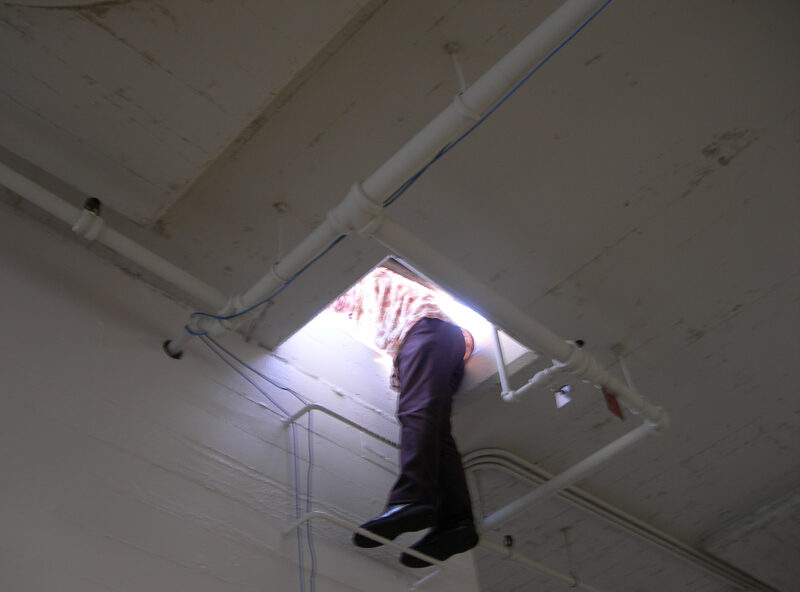
Looking down one night

Feb 23, 2007

Think Small

Feb 20, 2007

16tiny_span

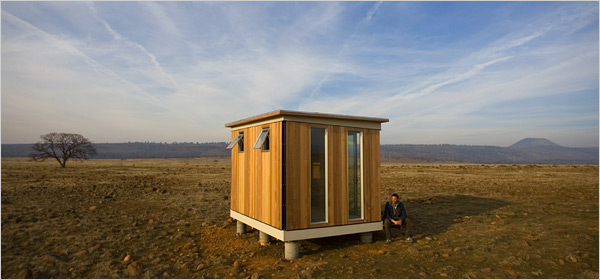
“Matthew Adams outside his 120-square-foot house by Modern Cabana on his 160 acres near Red Bluff, Calif. He wanted a well-designed dwelling that would have the least effect on his land.”

Minimalism and thinking small meshes well with eco-friendly culture and attempts to live off the grid.  From an article at the NYTImes.

A wave of interest in such small dwellings — some to serve, like the Shepherds’ home, as temporary housing, others to become space-saving dwellings of a more permanent nature — has prompted designers and manufacturers to offer building plans, kits and factory-built houses to the growing number of small-thinking second-home shoppers. Seldom measuring much more than 500 square feet, the buildings offer sharp contrasts to the rambling houses that are commonplace as second homes.

My Data Stream

Feb 19, 2007

After a year and a half of using social applications heavily, I recently had to revisit the plan to aggregate all my activity into one data stream. As the calendar rolled to 2007, I kept wishing I could look at all my social activity from 2006 in context: time, date, type of activity, location, memory, information interest, and so on. What was I bookmarking, blogging about, listening to, going to, and thinking about? I still had the urge to have an information and online activity mash-up that would allow me to discover my own patterns and to share my activity across the web in one chronological stream of data (to start with anyway).

While there are some great services like SuprGlu for aggregating feeds into a browseable blog format (see my SuprGlu here), it’s still a hosted service and I need something that runs on my own server so I can have greater flexibility.

Others have been toying with this idea as well. A few months ago, Jeremy Keith wrote about his experience with this very issue in “Streaming my life away.” He decided to write a PHP script that would track several RSS feeds (Twitter, Flickr, Del.icio.us, Last.fm, and blog posts) by time-stamp and then display them in chronological order. It doesn’t do any caching but “the important thing is that it’s keeping the context of the permalinks (song, link, photo, or blog post) and displaying them ordered by date and time.” His experience resonated with me. I tried his PHP script but it didn’t quite work on my blog. Jeff Croft also has a similar implementation at his tumblelog, which appears to be down now.

The night I was playing with this idea, I twittered about it and heard from Boris Anthony who showed me his ggalaxy multi-contextual aggregator, a great system for seeing all of your friends’ (or favorite feeds) output in one place. In this case, the river of news is limited to 7 days and not archived. ggalaxy will be a WordPress plugin.

For my immediate purposes, I wanted to have the data from my selection of RSS feeds parsed and actually imported into my own MySQL database so it was archived and referenced in my own system. After doing some more research to see if anything was out there specifically for my blog software, I found feedgrab, an amazing plugin by Andrew Weaver in the ExpressionEngine forums. It worked well but needed the ability to import data from RSS feeds with unique criteria. After an email exchange with Andrew, he informed me this was already in the works. He updated the plugin and added new features within a couple of days. Big thanks to Andrew for writing this (and all the great programmers that support the open source community with their expertise).

My data stream:
http://www.emilychang.com/stream

I set up a separate blog for each of my services with custom fields for the data and I’m tracking my RSS feeds from:

The plugin script fetches the RSS feed from each service and then parses the XML and imports the data from pre-determined fields into an ExpressionEngine blog database. This is then displayed on my stream page by time-stamp with an icon to indicate the service or my blog source. You can click on the mini-calendar to view activity by day.

The script runs automatically every day and imports data from the various services. I can now search that database with the ExpressionEngine search engine by keyword(s). While this is internal to me at the moment, I’ll make the search public after I’ve customized it a bit. If I search for “urban” I would see results for all my bookmarks tagged red in stylehive, del.icio.us, music I had listened to through last.fm with the title or band “red,” photos I posted to flickr with that tag, status messages at twitter, events I was watching or attending at upcoming, Ideacodes news, or eHub apps with a match.

When I wrote about this back in September 2005, I was thinking that this type of aggregating by tag would also be helpful.

But, I’m also finding that the more tagging I do in various places and for different types of content, the more I feel my metadata becoming siloed into these other databases. Even though today’s new applications have moved beyond rigid categories and allow me to tag my own data, the current state of tagging doesn’t allow for us to map these information relationships from one site to another – or perhaps more aptly, to see a snapshot of our metadata universe. I’m still looking for a way to see how my current tags crossover with one another, and with tags made by others – the aerial view.

This type of attention stream seems harder to do right now since each web service does tags quite differently within RSS enclosures.

For now, this activity stream idea is providing the start to a holistic view of my activity across online networks: both my own and the ones I use. In turn, this acts as a conduit for you, the reader. Rather than just a static “recommended links” page or a blogroll, the data stream opens up my activity to you in semi-realtime and at one website. I’ll continue tweaking the content, navigation, and layout so watch for changes. Let me know what you think!

My data stream:
http://emilychang.com/stream

UPDATES:

See discussion about my post on Techmeme

March 4: Watching the stream by Jeremy Keith

Life Data Stream by Thomas Vander Wal

Traffic And Flow by Stowe Boyd

Attention Streams – Your life in feed by Chris Saad

Taming your own river of news by Grant Robertson on DownloadSquad

Everyone’s data streams for everything visible everywhere by Ross Dawson

When What i Say and do Probably Matters the Most by Daniela Barbosa

Marketing 2.0 by Robyn Tippins

My Life Stream by Jack Vinson

Lifestreams could help create new personalised discovery engines by Sam Sethi

IDEA #23 – Your Syndicated Chronological Life by Steve Poland

Lifestream – Could it be the next big thing? by Mark Krynsky

39 Comments

PicoLED

Feb 13, 2007

Kyoto-based electronic component creator, Rohm, announced today that the world’s smallest LED, the PicoLED will go into mass production in April.

200701230015a1

[Via FujiSankei Business if you can read Japanese]

I am now rather keen on the word “pico” meaning 1. one trillionth, part of 2. very small.  I wonder if it’s smaller than “micro” which is also defined as “very small.”

Ideacodes will be at SXSW Interactive

Feb 13, 2007

Ideacodes co-founders, Emily Chang and Max Kiesler will be at the SXSW Interactive Conference coming up March 9-13, 2007.  Emily was invited by Tom Markiewicz, CEO of EvolvePoint, to be part of the “Using RSS for Marketing” panel scheduled for Sunday, March 11, 2007 from 10-11am.  Emily is looking for feedback on current trends in RSS.  If you’ll be at SXSW and would like to meet up, please send us a note as we’re planning to have a get together sometime during the conference.  See you in Austin!

Self-Sousveillance

Feb 12, 2007

I came across this post while looking for information on attention recording and one of the paragraphs regarding self-documentary really resonated with me.

Greg Yardley writes:

I’m also running the Attention Recorder because I’m afraid of forgetting. When I studied Russian history, some time ago, I was struck by just how little remained of people, only a few centuries after their deaths. Only scraps of documentation survive, if any; many individuals have simply ceased to exist. Provided I take care of the data, the Attention Recorder can serve as a record of me, allowing future generations to reconstruct how I thought and when I thought it. Perhaps I’ll be a good Master’s thesis a couple of centuries down the road. Or – more importantly – perhaps I’ll still be around in a couple of centuries. Ray Kurzweill raises the possibility in his The Singularity is Near, a book that’s been on my mind recently – and in case he’s right, and my lifespan is dramatically longer than my ancestors’, I want to make sure I remember who I am and where I came from in the centuries ahead. I wish I could record it all; what I see, what I hear, what I feel. I can’t, yet, although I’m confident I’ll be able to someday, and I’m hopeful I’ll be able to make use of those recorded surroundings some day after that. For now, my clickstream is a good start.

I’m into this idea of recording my digital stream as well. Practices of self-documentary and sousveillance have been re-occuring themes in the arts and sciences. It’s just a matter of time before we have the tools to do this for ourselves in our digital lives.

In terms of current software, there are a few programs that map and track our activity within our computer OS, such as Slife for the Mac. With the Internet, there’s basic archival and tracking methods available to us – browser history, site traffic patterns from users, software to track browser usage – but most web-based activity and attention recording is fairly limited. Or it’s not the kind we want, like those used by employers or the government for citizen surveillance. The Attention Recorder mentioned above attempts to give individuals access to their web-base digital trail.

In general, though, our web-based and OS-based activities are disparate and exist in two separate worlds. What we need are tools that combine the two experiences to allow us to track, visualize, and understand our myriad digital activities.

1 Comment

SXSW Interactive Panel

Feb 12, 2007

A few months ago I was asked by Tom Markiewicz, CEO of EvolvePoint, to be on a panel about “Using RSS for Marketing” for the SXSW Interactive Conference coming up March 9-13 and I gladly accepted.

The other panelists include Bill Flitter of Pheedo, Greg Reinacker of NewsGator, and John Jantsch of Duct Tape Marketing. All of them are with RSS and marketing companies, which should make for good conversation.

Last week saw the launch of Yahoo! Pipes, an “interactive feed aggregator and manipulator,” followed by lots of enthusiasm from the tech community. The reality of mashing up, mixing, filtering, sorting and combining data sources into a unique output has just been made easier. See Tim O’Reilly’s post, Pipes and Filters for the Internet.

In preparation for the panel, I’m soliciting your feedback and insights on topics related to RSS to help shape our discussion. A quick scan of the current eHub entries in the RSS category shows 109 services. I’ll be pulling these out and paring them down into logical groupings.

Of course, the technology is only part of the equation. As I brainstorm the myriad of other issues related to RSS, I’ve started making a general list. It’s by no means comprehensive. I hope you’ll provide other topics in the comments below or through my contact form. Once I’ve gathered enough ideas and resources, I’ll document the feedback in some form online (wiki perhaps) and continue discussing with the panelists.

Technology
- RSS readers
- Aggregators
- Microformats
- XML
- OPML
- Browsers and RSS
- Mobile

Concepts
- Adoption of RSS by mainstream
- Data remixing with new apps (Pipes and Plagger)
- Multimedia RSS trends (podcasts, vidcasts)
- RSS as direct broadcast
- Placelessness of data

I’m also looking for case studies or research around:
- Feed traffic vs site traffic trends
- Benchmarks and best practices

I’m curious, what have you done with your site or company to advantage RSS? What RSS services are you currently using and how has it benefitted you? What trends in RSS are you noticing?

I haven’t been to SXSW in a few years. The last time I was there, I was lucky to have my artcodes/ADD project as a finalist in the weblog category. This time, I’m really looking forward to being more involved and interactive. I posted over at Ideacodes that Max and I will both be at SXSW. Please send us a note if you’d like to meet up as we hope to plan a social get together while we’re in Austin. Lots of our friends and clients from SF will be there as well so it should be a good time.

Look forward to your thoughts.

UPDATE: March 31: You can catch a podcast that our panel did prior to SXSW in this episode of John Jantsch’s Duct Tape Marketing podcast: Using RSS in Marketing Podcast (or via direct mp3 download here).

I really enjoyed the SXSW panel. You can see some posts by attendees here:
Panel: Using RSS for Marketing at EchoSXSW
SXSW: Using RSS for Marketing at Read/Write/Web

My photo set from SXSW:

5 Comments
Emily Chang

This is the personal site of Emily Chang, designer and co-founder of Ideacodes, specializing in web, UI, UX, IxD. Also an entrepreneur, webling, geek, blogger, surfer. Likes robots. More...

Navigate